
ATIX AG
  • Services
    • Consulting
      • Linux Platform Operations​
      • Infrastructure Automation
      • Container Platforms and Cloud
      • DevOps Processes, Tooling and Culture
      • Cloud Native Software Development
    • Products
      • orcharhino
        • About orcharhino
        • Support
        • orcharhino operation
    • Technologies
      • Ansible
      • AWX and Ansible Automation Platform
      • Docker
      • Foreman
      • GitLab
      • Istio
      • Kubernetes
      • Linux Distributions
      • OpenShift
      • Puppet
      • OpenVox
      • Rancher
      • Rundeck
      • SaltStack
      • SUSE Manager
      • Terraform
  • Trainings
    • Ansible Training
    • AWX Training
    • Docker & Container Training
    • Git Training
    • Kubernetes Training
    • OpenShift Training
    • orcharhino Training
    • OpenVox/Puppet Trainings
    • Terraform Training
  • Events
    • Webinars
  • Blog
  • Company
    • About Us
    • References
    • Corporate values
    • Social engagement
    • Newsroom
    • Newsletter
    • Contact us
  • Career
  • German
  • Click to open the search input field Click to open the search input field Search
  • Menu Menu

Software-defined storage

Where to put it? This question is not only asked by the men who load the car and whose wives arrive with more and more luggage. IT experts, who have to cope with the explosion of data thanks to the cloud and mobile devices, are also faced with this question.
What do we need for the future?SDS! So it’s only natural that we dedicate today’s blog to this topic.

ebook Infrastucture Automation

Free E-Book

Infrastructure Automation with Linux and Open Source Tools

This free e-book provides practical examples of how you can use Linux and open-source tools to simplify recurring tasks, reduce errors, and establish scalable IT processes.
Discover it now.

Download now for free

Software defined storage is used particularly in virtualized data centers, as the data storage is separated from the hardware and only the SDS system has “contact” with the storage hardware. It sounds very tempting, with a software solution you can manage and control data storage. But is that true?
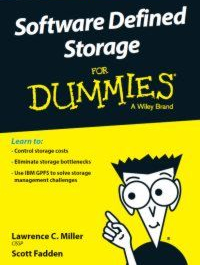
SDS promises a lot, namely scalability, virtual overall structure of the data, deduplication function and much more. If it really works like that, I’ll be a fan.

What is even more exciting is that snapshots, high-speed caching, thin provisioning and more can also be integrated, as everything is hardware-independent.

This saves costs and makes every controller happy, also because the storage system does not have to be replaced as often or employees do not have to retrain due to new hardware. And all this means that business operations can continue, no downtime!

Admittedly, software defined storage is not a new invention; critics call it old software wrapped in a nice new marketing coat. However, it has been significantly enhanced so that both small and large companies can cope with the challenges of rapidly growing technologies.

We like that!

ATIX-Crew
+ postsBio

Der ATIX-Crew besteht aus Leuten, die in unterschiedlichen Bereichen tätig sind: Consulting, Development/Engineering, Support, Vertrieb und Marketing.
  • ATIX-Crew
    Foreman Birthday Party 2024
  • ATIX-Crew
    CrewDay 2024
  • ATIX-Crew
    Navigating the XZ Security Vulnerability: A Comprehensive Guide
  • ATIX-Crew
    Automating Kafka with Ansible
  • ATIX-Crew
    Managing Large Debian Repositories with Pulp
  • ATIX-Crew
    Configuration Management across Different Networks with AWX
  • ATIX-Crew
    pulp_deb past, present, and future – tell us what pulp_deb development should focus on next
  • ATIX-Crew
    DevOps Culture “without Bullshit”
  • ATIX-Crew
    ATIX @ CfgMgmt Camp 2020
  • ATIX-Crew
    The Future of Ansible
  • ATIX-Crew
    A somewhat different OSAD
  • ATIX-Crew
    Save The Rhino
  • ATIX-Crew
    Ansible Collections – More clarity and easier sharing in Ansible
  • ATIX-Crew
    SBOL: Open Source based exchange for biotech enthusiasts
  • ATIX-Crew
    Test Ansible roles with Molecule
  • ATIX-Crew
    Workshops in the Cloud – What Ansible, Docker and the GitLab CI/CD offer for this
  • ATIX-Crew
    ATIX Crew on Tour: Geocaching and pasta salad by the water
  • ATIX-Crew
    ATIX’s Debian/Ubuntu Erratum Service is now open source!
  • ATIX-Crew
    The ATIX crew @ Config Management Camp 2019
  • ATIX-Crew
    From the starting block into the fire!
  • ATIX-Crew
    orcharhino-installer Plugin Selection
  • ATIX-Crew
    fpm – the fast track to the parcel
  • ATIX-Crew
    ATIX #CrewDay: Rhino learns to speak!
  • ATIX-Crew
    SaltStack: Salty alternative to the puppet player
  • ATIX-Crew
    Snapshots for everyone!
  • ATIX-Crew
    Configuration management with Ansible
  • ATIX-Crew
    Creation of Foreman RPM packages with Docker containers
  • ATIX-Crew
    Rancher: New containers for the (server) farm – quick and easy
  • ATIX-Crew
    Rancher: Conducting a container pack
  • ATIX-Crew
    Docker Swarm: A herd of containers
  • ATIX-Crew
    ATIX at the Chemnitz Linux Days 2017 – A story from the perspective of our learners
  • ATIX-Crew
    Docker containers – a lightweight alternative to virtualization
  • ATIX-Crew
    Selenium IDE – Automated testing of web applications with a browser

On this page

ISO 27001 Certified Download ISO 27001 Certificate
ISO 9001 Certified Download ISO 9001 Certificate
Newsletter
Never miss anything again. Sign up for the ATIX newsletter!
Sign up now
Blog
  • Blog Start Page
  • ATIX Insights
  • Cloud Native
  • Container Plattformen und Cloud
  • DevOps
  • Infrastructure Automation
  • Linux Platform Operations
  • orcharhino
Privacy & Legal

Privacy Policy

Imprint

Terms and Conditions

B2B

Twitter     Facebook    LinkedIn    Youtube     mastodon=

© Copyright – ATIX AG

Scroll to top Scroll to top Scroll to top